
We continue our series of interviews with projects supported by ArtPower Belarus, funded by the European Union.
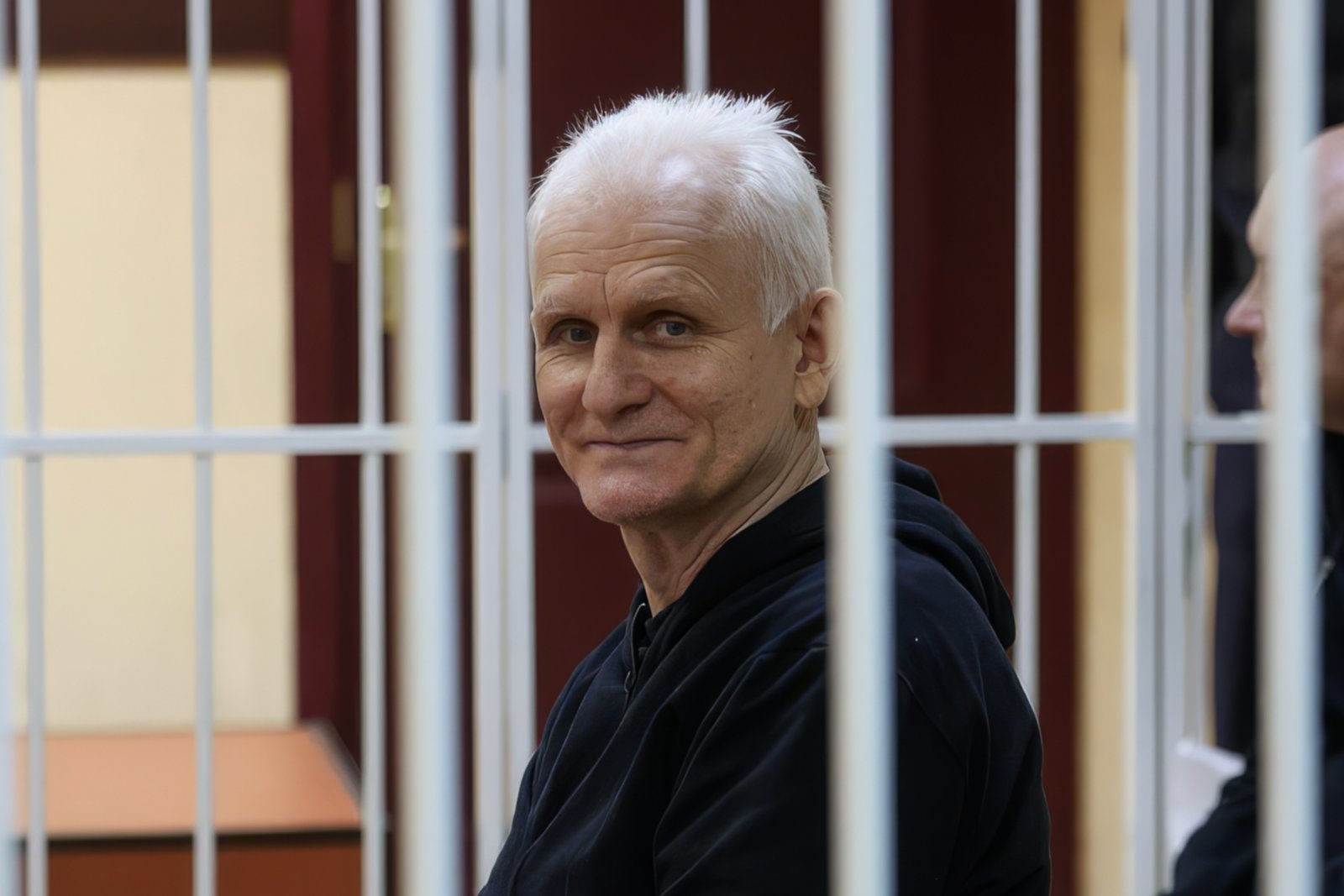
The documentary BIALIATSKI / UNBROKEN took more than three years to create. What began as an idea for a film about Ales Bialiatski following his receipt of the Nobel Peace Prize gradually evolved into something much larger. As the filmmakers immersed themselves in archives, testimonies, and conversations with people who had known Bialiatski in different countries and at different stages of his life, it became clear that this could not be merely a biographical portrait of one individual.
For this success story, we spoke with Aliaksandra Hlaholieva (A.H.), the film’s screenwriter and co-producer, Teresė Rožanovska (T.R.), the Lithuanian producer, and included a reflection from Ales Bialiatski himself.
How the film began
The idea for the project emerged in the year Ales Bialiatski received the Nobel Peace Prize, while he was still imprisoned in Belarus.
According to Aliaksandra Hlaholieva, the initial proposal came from Yauhen Wapa, who suggested creating a project dedicated to Bialiatski. At that point, the team already had experience producing documentary content for television and YouTube, so they first created a short documentary.
A.H.:“We made a short documentary for YouTube. At the same time, Yauhen Wapa published an excellent book about Ales, which also appears in our film. While working on that project, we realised we had only used perhaps five or ten percent of all the material we had collected. That’s when we understood that we didn’t want to make just another short biographical film. We wanted to create a much broader documentary about Ales and his international human rights work.”
For the filmmakers, Bialiatski’s international work became one of the project’s greatest discoveries.
In Belarus, he is widely recognised as the founder of the Human Rights Center Viasna, a political prisoner, and a Nobel Peace Prize laureate. Yet the scale of his international engagement extends far beyond Belarus.
A.H.:“This was a whole dimension of his life that remains relatively unknown and underexplored. We learned so much about the people he worked with across the world — in Bahrain, Colombia, Tunisia. We became fascinated by how human rights defenders cooperate internationally, how these networks function, and how solidarity is built across borders.”
Gradually, the idea evolved into a film not only about one remarkable individual but also about the international human rights community of which Ales Bialiatski has long been an integral part.
Voices from around the world
Reaching people who had worked with Bialiatski across different countries became possible thanks to Sasha Kulayeva, one of his closest colleagues, who spent many years working alongside him at the International Federation for Human Rights (FIDH).
For the filmmakers, it was important to include not only those who had stood beside Bialiatski in recent years, but also people whose paths had crossed with his much earlier — sometimes only briefly, yet meaningfully.
A.H.: “Some had met him fifteen years ago, others only briefly. But every single person Sasha contacted on our behalf responded in exactly the same way: ‘Ales? Of course. We’ll talk to you. We’ll give an interview. Whatever you need.'”
Little by little, the documentary came together like a mosaic, combining personal testimonies, international perspectives, archival footage, and stories from colleagues, family members, and friends who saw in Bialiatski not only a Belarusian human rights defender but also a figure of global significance.
What ArtPower Belarus made possible
Work on the documentary began without stable funding. The team sought support from a variety of sources, including institutions in Lithuania and Germany, but securing financial backing proved to be a slow and challenging process.
T.R.: “We actually started making the film without any funding at all. In Lithuania, we were unable to secure support from public funding schemes because there is only one national film fund, and opportunities for this type of documentary are extremely limited. Cinema is a very broad field, and factual, political documentary portraits like ours face enormous competition.”
According to the producers, the project’s financing was assembled piece by piece. Support came from the Konrad Adenauer Foundation, German partners, and other organisations and individuals who introduced the project to one another. However, it was the ArtPower Belarus grant that enabled the team to complete the film on time.
The grant covered the final stages of production and post-production, including additional filming, editing, sound design, colour grading, and the completion of the final cut.
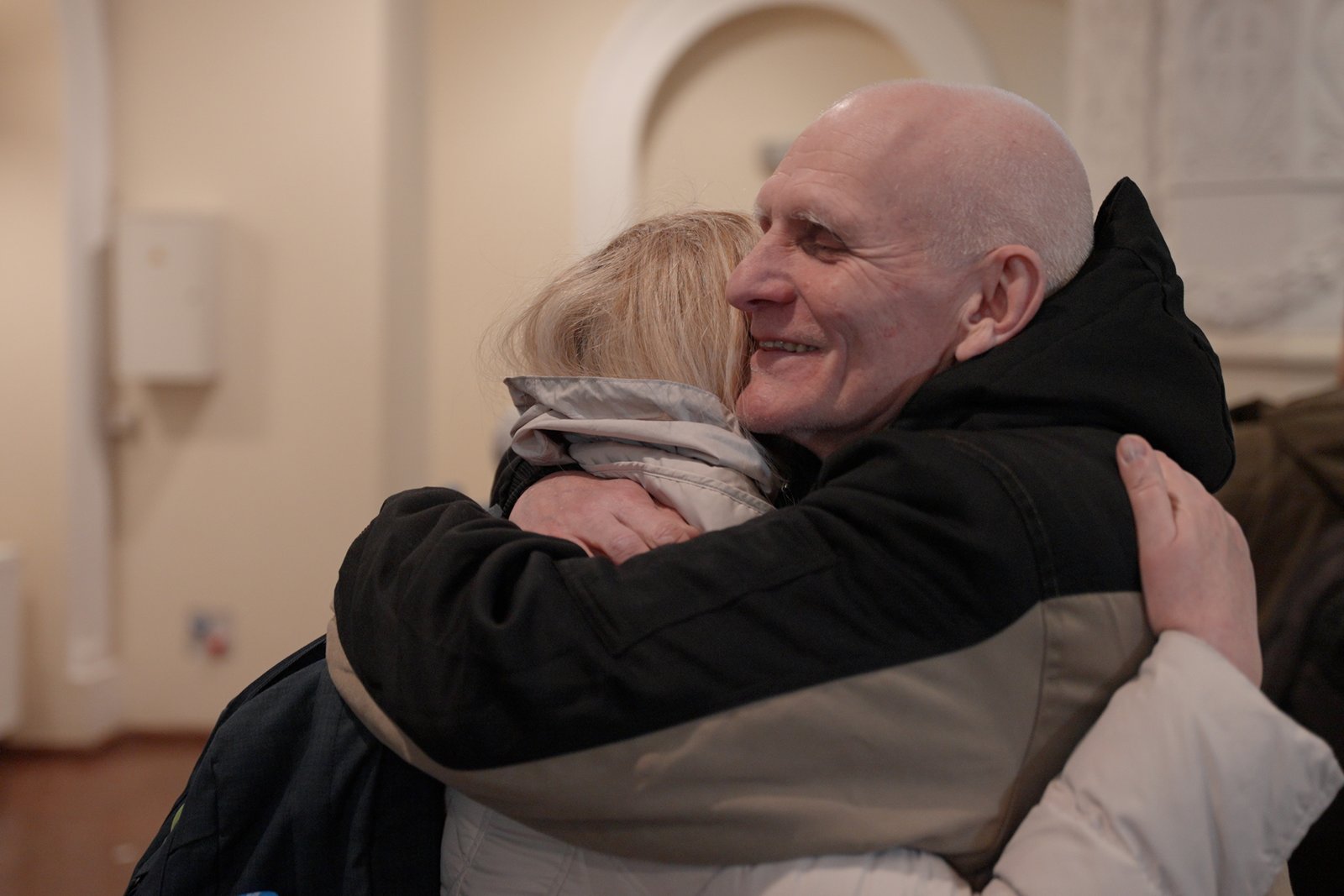
One of the most significant moments came while the team was finishing the edit: Ales Bialiatski was unexpectedly released from prison. His release fundamentally changed the film’s narrative and gave the filmmakers the opportunity to document events they had hoped for but could never have planned.
T.R.: “We were in the final stages of editing when Ales was released. We immediately gathered the team and filmed those first days — Natalya welcoming him at the airport late at night, and then their conversations afterwards. It all happened at the very last moment.”
The filmmakers also invited Sasha Kulayeva to join them for those days.
A.H.: “We brought Sasha over from Paris. She boarded the first available flight, and we met her as soon as she arrived. We filmed her as well. That became the final piece of the story. Afterwards, we had to weave all of those new scenes into the film.”
Post-production: a project in its own right
Completing the documentary proved to be one of the most demanding phases of the entire project, both technically and organisationally.
One of the biggest challenges was clearing archival materials. Obtaining permission to use footage from broadcasters and institutions often takes months, and approval is far from guaranteed.
T.R.: “Post-production is an incredibly difficult stage. In fact, we still haven’t completely finished settling all the archive rights. Obtaining permission to use archival footage can take months. Television channels often don’t respond for half a year, and then eventually tell you they can’t license the material because they don’t hold the rights to transfer it to third parties.”
Another major component of the work involved sound design and colour grading. Audiences at the first screenings immediately noticed the film’s technical quality and the care invested in its final presentation.
An international team and the lithuanian context
Although the documentary tells a Belarusian story, it was not created solely by a Belarusian team in exile. Lithuanian film professionals played a central role throughout the production process, including the director, editors, sound designers, cinematographers, and other members of the crew.
T.R.: “This wasn’t simply a case of Belarusians making a film on their own. It was a genuine collaboration with Lithuanian filmmakers, and that was extremely important. The entire post-production process — editing and finishing — was carried out by Lithuanian film professionals. It was a wonderful collaboration. Incidentally, our director’s surname is also Bialiatskis.”
For the Lithuanian team, the Belarusian context did not require extensive explanation. Lithuania’s geographical proximity, shared history, and collective memory of the Soviet period created an immediate understanding of the story.
T.R.: “Lithuania is close to Belarus not only geographically but also through our shared historical experience over recent decades. Because of that, many aspects of the story were immediately understandable to the Lithuanian team. Had the film been made in a country further removed from the Belarusian context, we would have had to spend much more time explaining the background. Here, everyone involved already understood what was happening and why it mattered.”
At the same time, the perspective of a Lithuanian director proved invaluable. His outsider’s взгляд helped the team identify questions that Belarusians themselves, deeply immersed in the context, might never have thought to ask.
More than a film about one person
As work on the documentary progressed, the filmmakers realised they were telling a story that reached far beyond the life of a single individual.
The film became a portrait of an entire community of people who have spent decades defending human rights, supporting one another across borders, and preserving solidarity even under the most difficult circumstances.
This perspective also shaped the way the film was structured. Rather than following a strictly chronological biography, the filmmakers sought to place Ales Bialiatski within a much broader international context.
A.H.: “We wanted people to understand that Ales is not alone. He has always been part of a global human rights movement. Throughout the film, you see how people from different countries know one another, work together, support each other, and continue building these connections over decades.”
For the team, this became one of the documentary’s defining ideas: to show that the struggle for human rights in Belarus is inseparable from the broader international movement that has stood alongside Belarusian civil society for many years.
The first screenings
The film premiered in Vilnius in March 2026, marking the 30th anniversary of the Human Rights Center Viasna. For the filmmakers, this was more than simply the first public screening—it was the culmination of more than three years of work.
The audience included colleagues, human rights defenders, representatives of international organisations, journalists, and people who had personally known Ales Bialiatski.
According to the team, one of the most rewarding aspects of the premiere was seeing how naturally the documentary resonated with both Belarusian and international audiences.
A.H.: “Of course, Belarusians recognised many of the people and events immediately. But we also saw that international viewers, even those with little prior knowledge of Belarus, were able to follow the story and connect with it emotionally. That was very important to us.”
The filmmakers believe that the documentary succeeds because it speaks not only about Belarus, but also about universal values: dignity, freedom, solidarity, and the responsibility people bear for one another.
Ales Bialiatski: “this is a film about many people”
After watching the completed documentary, Ales Bialiatski himself noted that he did not see it as a film solely about his own life.
Instead, he believes it captures the story of an entire generation of people who have devoted themselves to defending human rights.
“I don’t see this as a film only about me. It’s a story about many people who have worked together over decades to defend human dignity, freedom, and justice. I simply happened to become one of the people through whom this story is told.”
For the filmmakers, these words became the strongest confirmation that they had achieved what they set out to do.
The documentary is not simply a biography of a Nobel Peace Prize laureate.
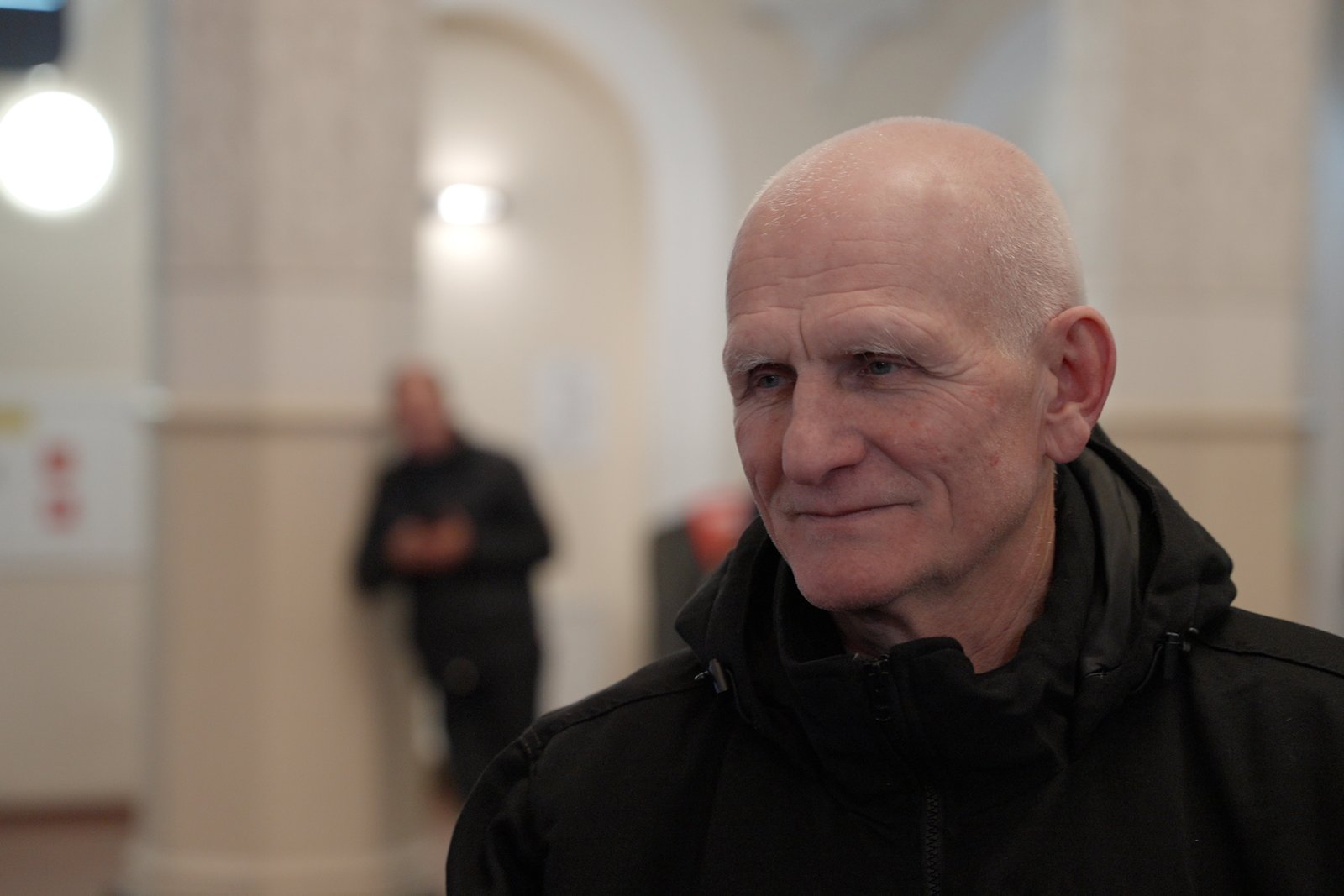
It is a story about solidarity that transcends borders, about people who continue supporting one another despite imprisonment and repression, and about culture’s ability to preserve memory even in the darkest moments.
Looking ahead
The team plans to continue presenting BIALIATSKI / UNBROKEN at international film festivals and public screenings, bringing the story to audiences across Europe and beyond.
Their goal extends beyond introducing international viewers to the life of Ales Bialiatski. They also hope to deepen understanding of contemporary Belarus, the country’s civil society, and the decades-long struggle for human rights that continues today.
For the filmmakers, the documentary marks not the end of the journey, but the beginning of a broader international conversation.