
A column by Elina Kalnibalotskaya
At the Goethe-Institut Griechenland in Athens, as part of Refugee Week Greece, an event titled Stories of Courage and Solidarity brought together artists, researchers, and cultural organizations to discuss safe spaces for artists and cultural professionals in exile. The programme included the presentation of a new mapping study on support structures for exiled artists across Eastern Europe, followed by a panel discussion featuring practitioners working in this field.
Among the speakers was Elina Kalnibalotskaya, Director of Development at the Belarusian Council for Culture. In this column, she reflects on the conversations in Athens and considers where Belarusian cultural migration fits within the broader European landscape of displaced artists.
***
I’ll be honest: the discussion itself didn’t offer many new insights. Around the table were representatives working with Palestinian, Lebanese, Syrian refugees – and against the backdrop of their realities, the challenges facing Belarusians inevitably felt less immediate.
Yet one message came up again and again, regardless of the country or crisis being discussed. Everyone spoke about the importance of building connections, exchanging experience, ensuring mobility, involving cultural migrants in decisions that affect their lives, and creating the conditions for genuine integration into host societies – access to banking, education, and the labour market. These are needs that transcend borders. They do not depend on where you come from or what forced you to leave.
That observation became the starting point for a broader reflection, prompted by two publications released shortly before the Athens event. Although they approach the issue from different angles, both describe the same underlying reality.
One regional story, not six separate ones
The first is Displaced Culture(s), published by the independent cultural network ICON× together with the Danish Cultural Institute. The collection brings together essays examining cultural displacement across the six Eastern Partnership countries – Armenia, Azerbaijan, Belarus, Georgia, Moldova, and Ukraine. Rather than treating these as isolated national crises, the authors present them as manifestations of a single structural process that has reshaped the region since 2020.
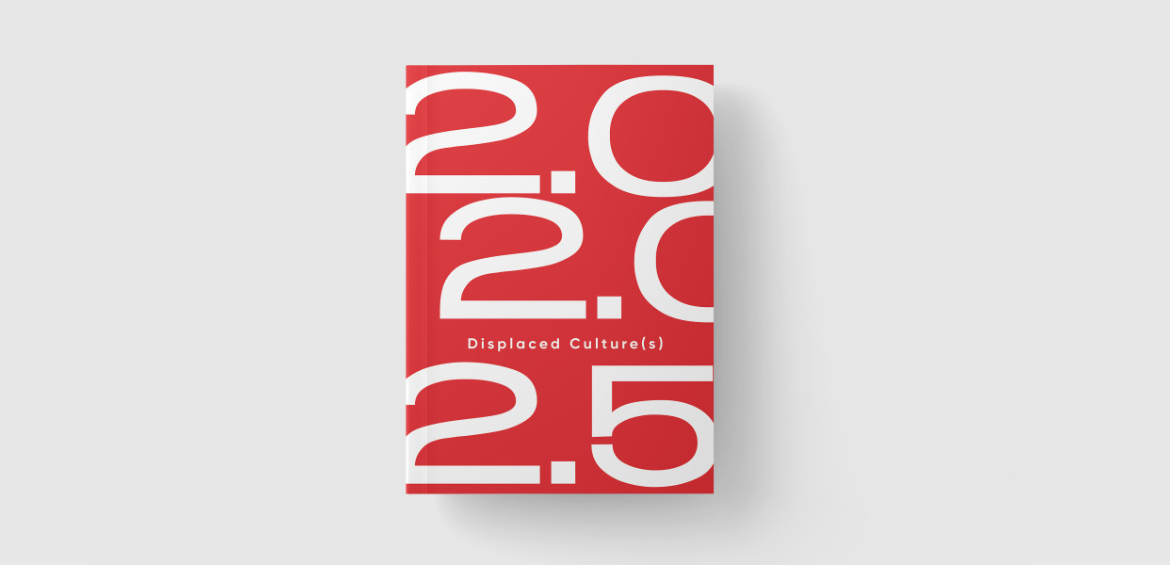
For me, this is perhaps the publication’s most important insight. Within this framework, Belarus is not an exceptional case but one chapter of a shared regional story. The displacement of Belarusian culture after 2020 sits alongside the pressures on Georgian culture following the adoption of the “foreign agents” law, the forced displacement of Armenians from Nagorno-Karabakh, and the upheaval experienced by Ukrainian culture after Russia’s full-scale invasion. The causes differ, as does the scale of each crisis, but the underlying pattern remains the same: artists and cultural workers are among the first to bear the consequences of repression, authoritarianism, and the shrinking of civic space.
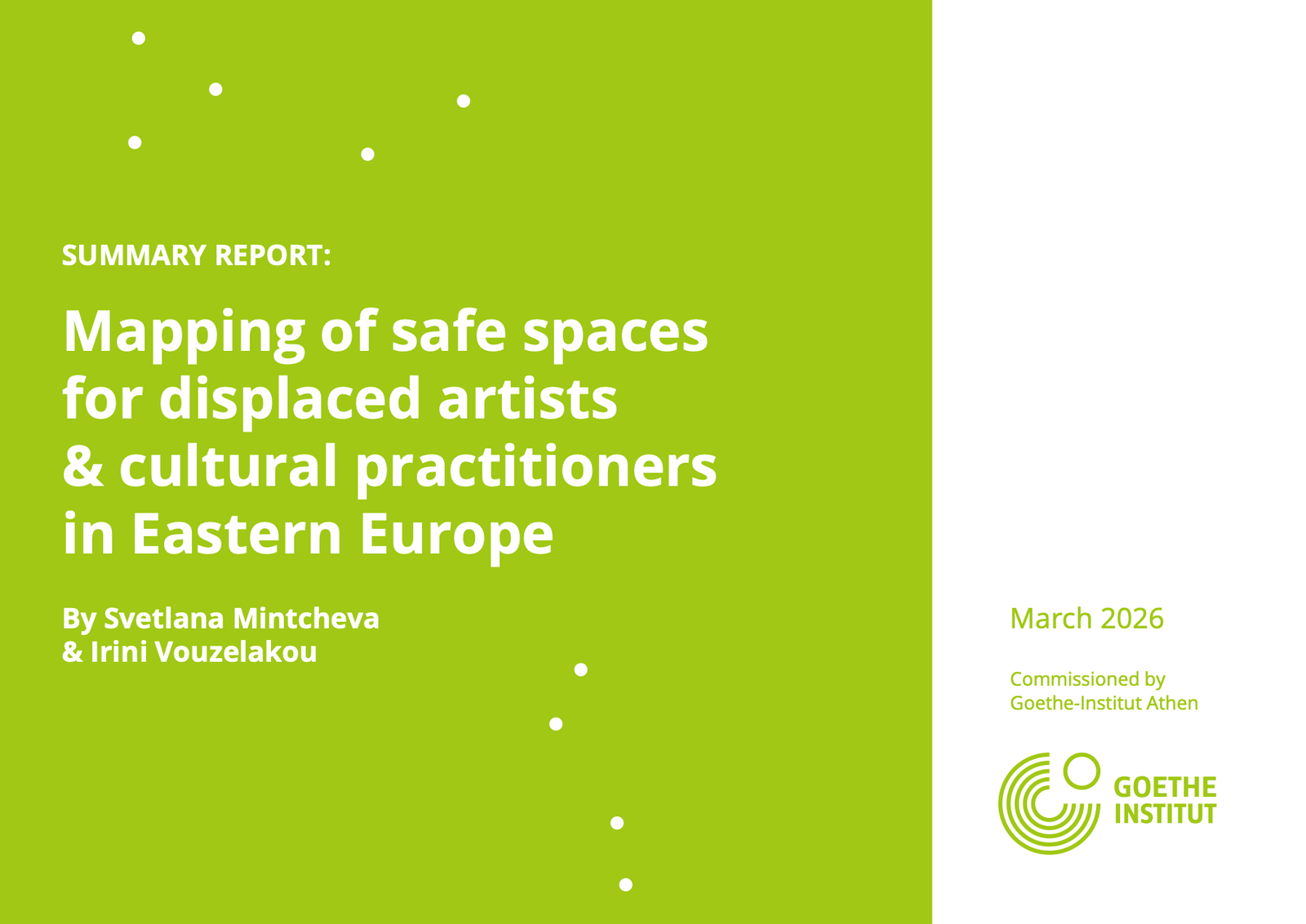
The second publication is a mapping study prepared for the Goethe-Institut Athen by Svetlana Mincheva and Irini Vouzelakou. Instead of examining countries of origin, it focuses on the countries receiving displaced cultural workers – Armenia, Bulgaria, Greece, Poland, Romania, and Turkey. Its conclusions closely mirror those of Displaced Culture(s). Across all six countries, support for migrant artists remains fragmented, largely dependent on grant funding, and rarely backed by long-term public policy. Governments tend to respond to crises rather than invest in sustainable support systems. As a result, the responsibility falls primarily on civil society, diaspora initiatives, and international donors rather than national cultural institutions.
Notably, the Belarusian Council for Culture itself appears in the study’s mapping of organizations operating in Poland, alongside both Polish and Ukrainian initiatives.
What unites us
Taken together — and viewed alongside the discussions in Athens – these two publications reveal several characteristics shared by cultural migrants across the region, regardless of where they come from.
- First, cultural displacement is no longer an exceptional phenomenon but a structural condition. It is not a temporary consequence of isolated crises but a defining feature of the region’s cultural landscape over recent years. This applies equally to Belarusian, Georgian, Armenian, and Ukrainian artists.
- Second, none of the six host countries studied has developed a comprehensive public policy for supporting displaced artists. Assistance remains fragmented, project-based, and heavily reliant on external donors.
- Third, support is closely tied to funding cycles. Programmes launched during moments of crisis often disappear once public attention fades and financial support declines, regardless of whether they serve Ukrainian, Belarusian, Syrian, or Afghan cultural communities.
- Fourth, self-organization has become a survival strategy. In the absence of stable institutional support, artists have built horizontal networks, archives, residency programmes, and mutual aid initiatives. This pattern is evident across Belarusian, Georgian, and many other artistic communities in exile.
- Finally, the priorities voiced in Athens were not uniquely Belarusian. The need for professional networks, mobility, participation in decision-making, and access to essential services such as banking, education, and employment appears throughout the Goethe-Institut study as a shared concern across all six host countries.
What makes the Belarusian experience different
At the same time, it would be misleading to suggest that all experiences of cultural displacement are interchangeable. Belarus shares many challenges with others, but there are important differences that deserve recognition – not to reinforce a sense of exceptionalism, but to ensure that common frameworks do not erase important distinctions.
The first concerns the scale and nature of violence. Sitting alongside organizations working with Palestine and Lebanon, I couldn’t help but feel how modest Belarusian challenges might seem against the backdrop of war and mass civilian suffering. This does not diminish the Belarusian experience, but it does raise difficult questions about how international attention and resources are distributed. Interestingly, a similar issue appears in Displaced Culture(s), where contributors note that Russian cultural migrants in Armenia often received greater financial support and international attention than Armenians forcibly displaced from Nagorno-Karabakh.
The second distinction is the clear division between cultural life inside Belarus and cultural life in exile. In her essay for Displaced Culture(s), researcher Lizaveta Stecko argues that culture within Belarus often has to remain deliberately invisible in order to survive, while the diaspora is able to establish museums, archives, and public platforms abroad. Yet this visibility also brings responsibility. Every public initiative undertaken outside Belarus may increase the risks faced by those who continue to work inside the country.
Finally, the growing use of the Belarusian language in exile is more than a cultural development – it is also a political act. Choosing Belarusian represents a conscious distancing from the Russian imperial worldview, which continues to shape much of Belarus’s cultural space. In this respect, the Belarusian experience has much more in common with Ukraine’s than with the experiences of countries such as Turkey or Romania.
Where do we go from here?
If Belarusian cultural migration is not an isolated phenomenon but part of a broader European reality, several practical conclusions follow.
First, perhaps it is time to move beyond seeking support for Belarus as a unique case and instead position ourselves more actively within regional frameworks such as those developed by ICON× and the Goethe-Institut. Shared frameworks create shared advocacy – and ultimately offer greater opportunities to influence European cultural policy than isolated, project-based initiatives.
Second, both publications recommend remarkably similar solutions: long-term funding instead of short-term project grants, lasting partnerships between diaspora organizations and local institutions, and the meaningful involvement of displaced cultural workers in decisions that affect them. These recommendations echo almost exactly what participants from entirely different regions and conflicts were saying in Athens. The solutions Belarusian culture in exile needs have, in many ways, already been identified. The challenge is not to reinvent them but to become part of the wider movement advocating for them.
Finally – and perhaps most importantly – we need to hold two realities in view at the same time. On the one hand, we must preserve an awareness of what makes the Belarusian experience distinct: the role of language, the process of decolonization, the divide between those inside the country and those abroad, and the responsibility owed to those who remain. On the other hand, we should recognize that Belarusian cultural migration is part of a much larger European story – one shared with Georgians, Armenians, Ukrainians, Azerbaijanis, Moldovans, and, more broadly, with artists from Syria, Afghanistan, Iran, and Palestine.
We are not alone in this experience. And perhaps that is the most encouraging conclusion of all. It means there are people with whom we can build common institutions, shared networks, and lasting solidarity – instead of carrying our losses in isolation.